Guide to proposed merger of Langley First School and Appletree Gardens First School
Introduction
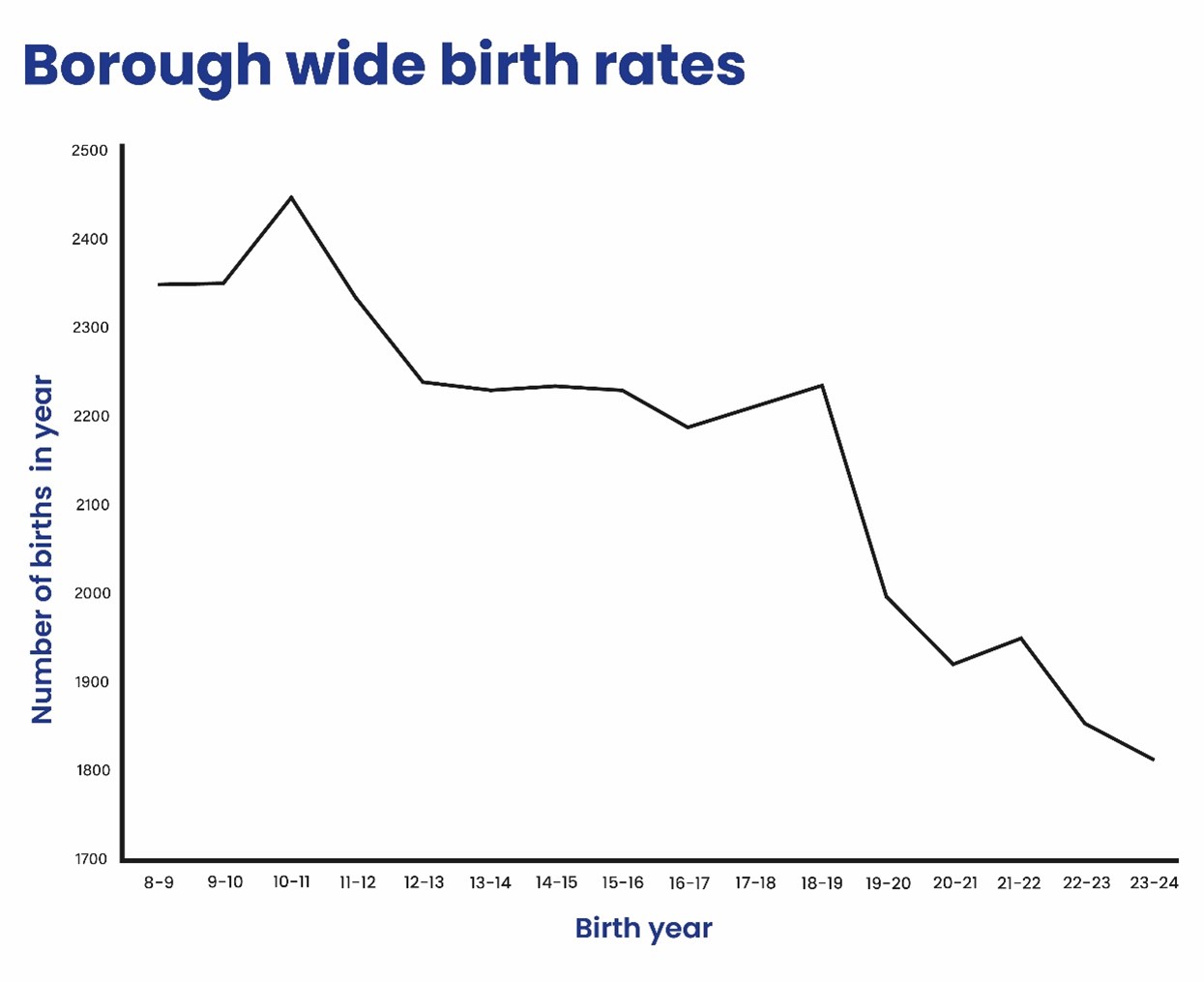
North Tyneside’s population is changing. Birth rates have fallen steadily since 2018/19 and there are now around 300 fewer children born each year. That’s the equivalent to 10 fewer classes annually.
There are now too many schools for the number of children in North Tyneside and too many places in the three-tier system in the Whitley Bay/Monkseaton area, which is also known by the Council as the North East Planning Area (NEPA).
The Council needs a clear plan to make sure the system works well for children in the area.
The consultation is looking at the proposal to:
- Merge Langley First School and Appletree Gardens First School
- Use the Appletree Gardens First School site to accommodate the merged school
It is hoped the merged school would have a new identity and new ethos, set by staff, pupils and the school community, to serve local children now and in the years to come.
At the same time the Council is proposing:
- To close Monkseaton Middle School
- To work with three other middle schools to reduce admission numbers
- To work with Whitley Bay High School to permanently increase admission numbers
The Council believes this would support the alignment of admission numbers from First through to High School and create educational and financial stability for the three-tier system. It gives pupils from the NEPA who are starting first schools the best chance of getting a place at a middle school and then Whitley Bay High School, if that is their preference. There is more on this below.
The consultation will begin on 2 October 2025 and end at noon on 13 November 2025. If no alternatives are found, the Council will move into the statutory consultation period with the outcome expected to be announced in January 2026.
To allow a merger to take place, the Council is proposing to close the buildings of Langley First School. This would mean the school would stop admitting pupils to Reception from September 2026. There would be no changes this academic year. If the proposal moves to the next phase we would work with employers - school leadership and governing bodies- to agree a full timeline and we expect the changes to have been implemented by September 2027.
There are similar proposals for schools in other areas of North Tyneside.
You may have some questions to ask, and this document will provide you with the background. There are more answers in options and background document and in the Frequently Asked Questions on Our North Tyneside Voice. Please read this in full before submitting your consultation response.
Background – Pupil numbers
Birth rates have fallen since 2018/19 and fewer pupils are entering schools. The new homes being built in North Tyneside will still not bring in enough children to fill all the schools.
Primary and First schools are already only 87% full and this will drop to 75% as smaller year groups move through.
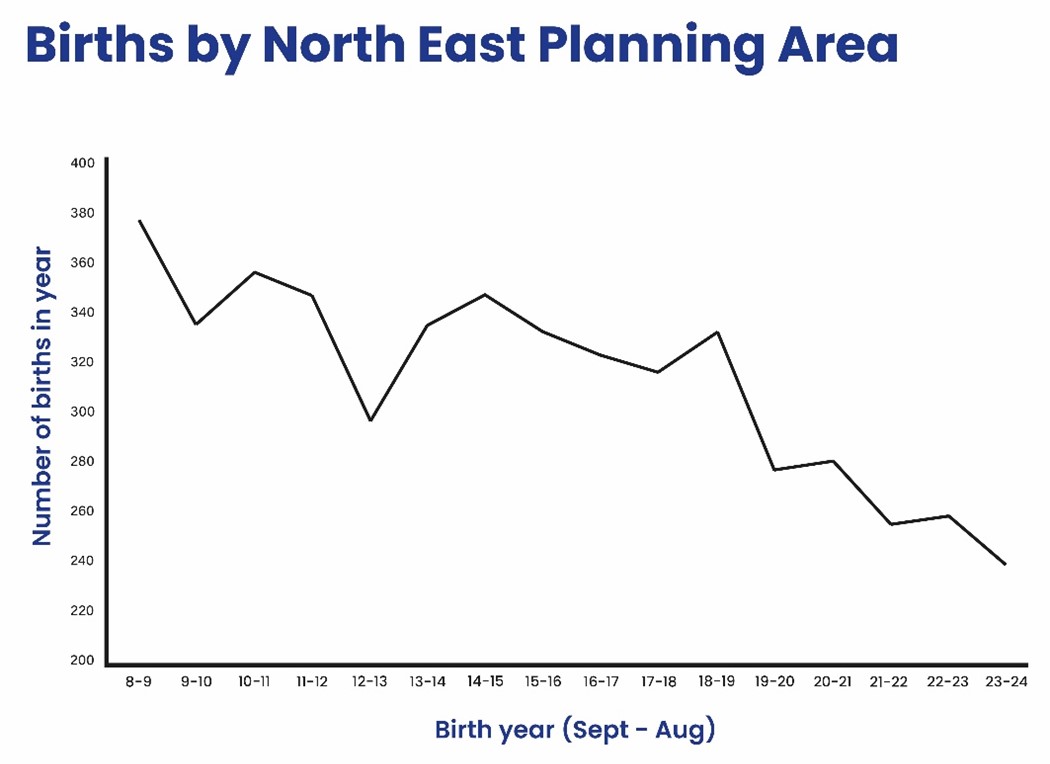
In the North East Planning Area this is more prevalent. Since 2018/19, there have been 113 fewer children born here, when compared to the highest rate, in 2010/2011. There are, and will be, too many empty places, or ‘surplus places’ at NEPA schools.
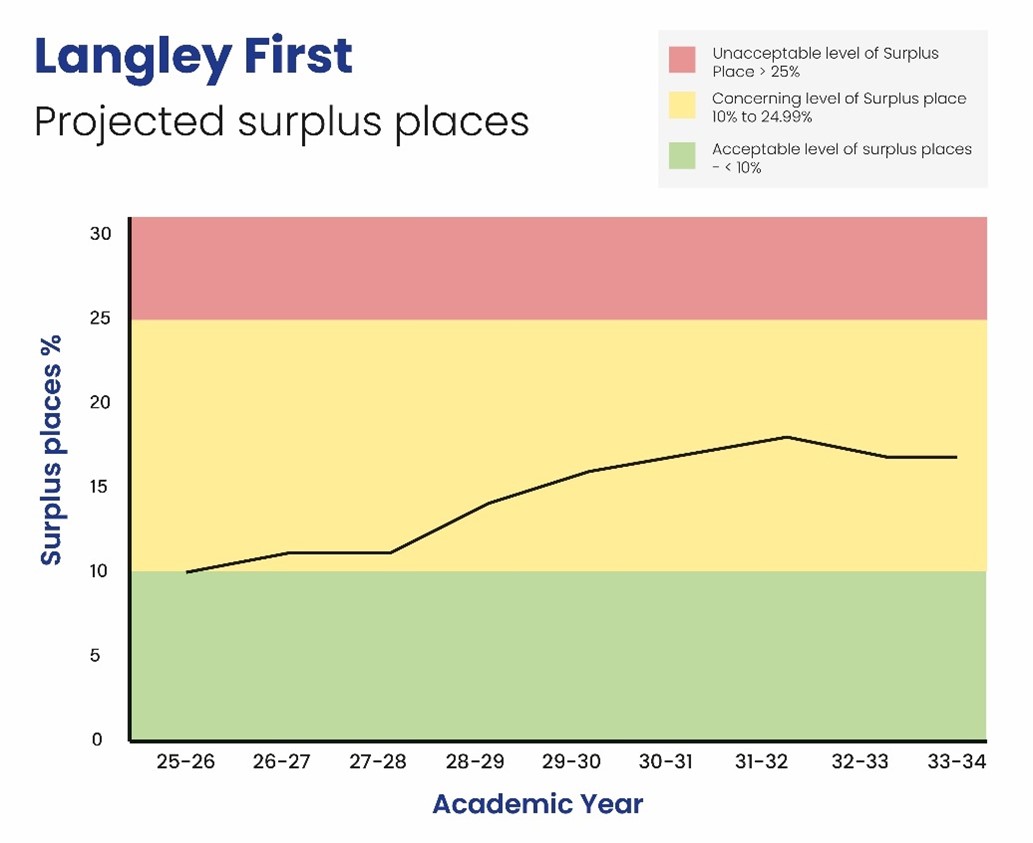
At Appletree Gardens First School, 14% of the places aren’t filled, and this is expected to worsen in the next decade. Less than half of parents and carers in the catchment area are currently choosing to send their child to Appletree Gardens First School.
At Langley First School, there is a similar trend for unfilled places, and a quarter of catchment parents and carers are choosing other schools. It is important that families have choices and options for their children, but the number of schools within the North East Planning Area means families have an excess of options, and pupils are spread too thinly around.

You can read more about why the Council considered and rejected merging other first schools in the area further down in the document.
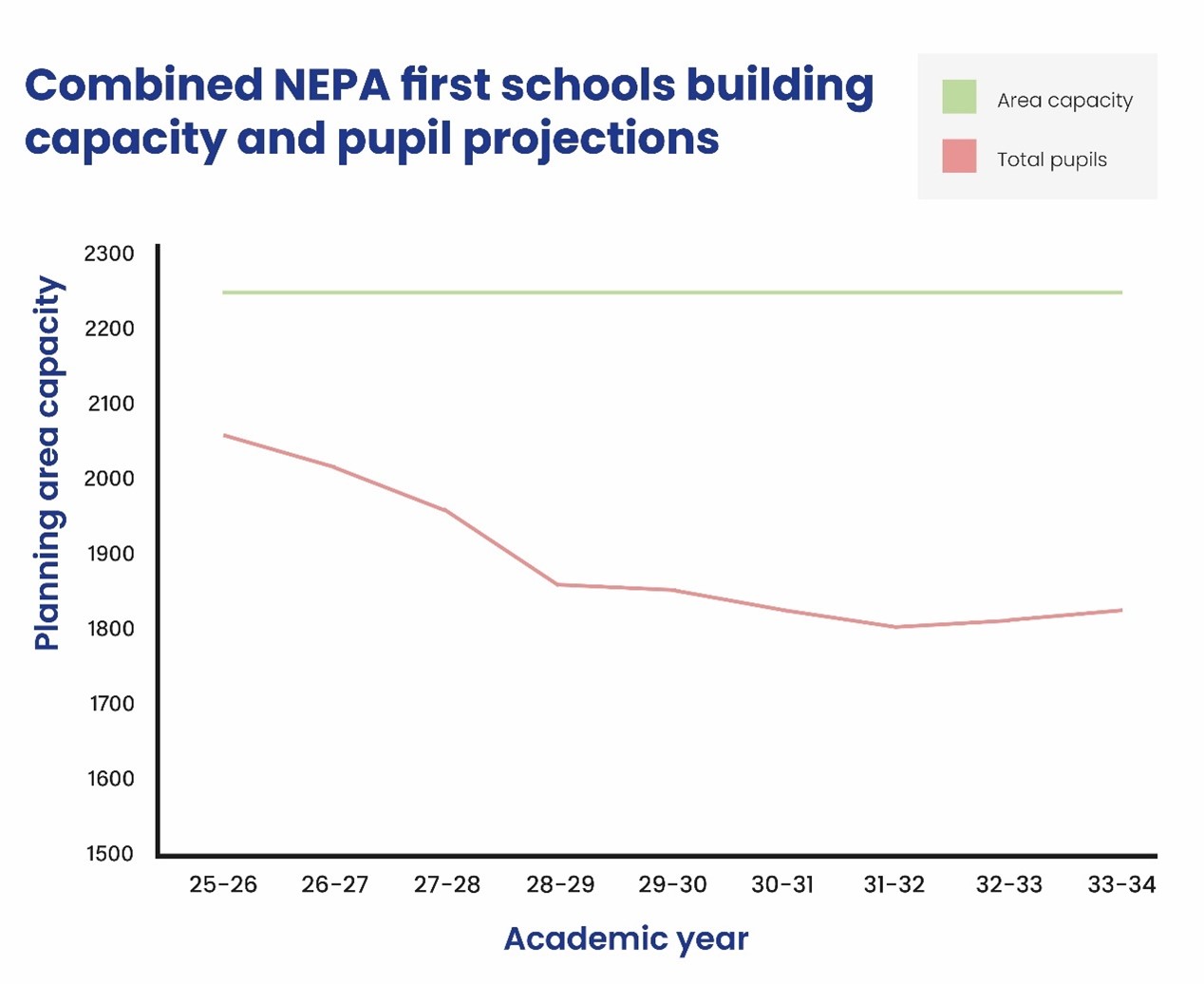
The graph below shows how much space there is at all schools across the NEPA first schools (Appletree Gardens First, Langley First, Whitley Lodge First, Coquet Park First, Marine Park First, Rockcliffe First, South Wellfield First and Southridge First) and how the gap between the capacity, and the number of pupils, will only get bigger if no action is taken.
Impact of closure of Monkseaton High School
In December 2024, the Council agreed the closure of Monkseaton High School from September 2026 because of falling pupil numbers and a growing deficit. This means that the number of High School places available in the three-tier system is significantly reduced.
Whitley Bay High School has temporarily increased its admission number to 390. Part of the Council’s proposals are to work with the school leadership and governing body to make this a permanent number.
If it is agreed, it means that all admission numbers from First School through to High School should be aligned. This gives NEPA families who want their child to stay in a three-tier system the best chance of that happening. If Whitley Bay admitted 390 pupils in Year 9 then the maximum number of pupils in each year group across all first and middle schools in the area should be 390.
This proposal would reduce the number of First School places across the NEPA area by 60, bringing it into alignment with High School places.
A consultation is currently taking place on the proposed closure of Monkseaton Middle School and changes to admission number at the other three middle schools. If agreed, this would mean that capacity throughout the system is capped at 390 places per year group.
What is the rationale for the decision to merge on the Appletree Gardens First School site?
The Council considered many factors before making this proposal. These include the school building and location, the local area, financial viability, pupil numbers and surplus capacity.
Appletree Gardens First School and Langley First School are very close to each other – only 600 metres apart. This means it wouldn’t be too far for pupils to travel and the majority of homes can access Appletree Gardens First School without crossing major roads. If the Council was to retain Langley First School, it would mean pupils in the eastern edge of Appletree Gardens First School catchment would have 1500m to commute to a catchment school.
Appletree Gardens First School has a larger school building with 17 class spaces and two large halls. This means it has the physical space for combined pupils. Langley First School is the smaller of the two sites and has 13 class spaces.
Appletree Gardens First School has a larger catchment area equating to 44 homes per planned place in catchment. Langley First School has a slightly smaller catchment with an average of 40 homes per planned place in catchment.
While currently both schools are in surplus (they receive more funding than they spend), Langley First is predicting a deficit (spending more than they receive) in 2026 which is projected to grow to £0.751m by 2028. At the same time Appletree Gardens is predicting it will enter deficit by 2028. School leaders have made changes and worked hard with the Council to make the financial situation better, but because low pupil numbers mean less funding, the situation is not improving. If left unchanged, the risk is that the two schools would continue to grow in deficit, and this in turn would limit their ability to sustain high quality education.
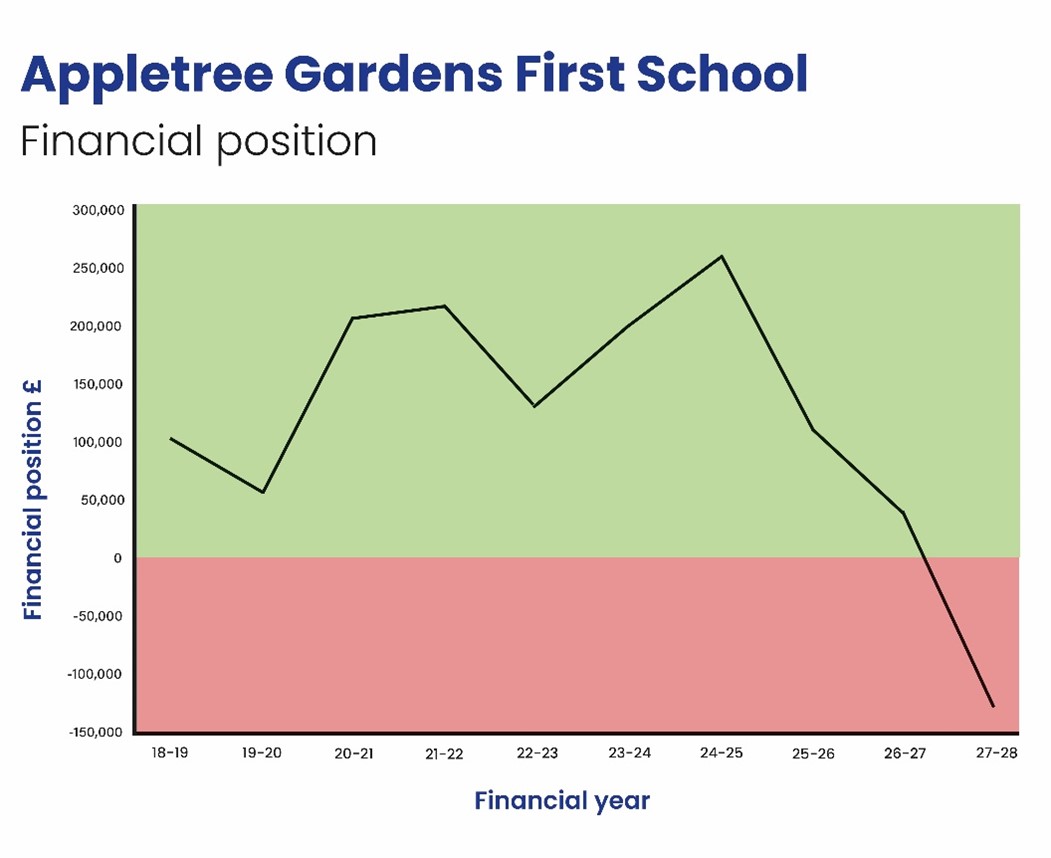
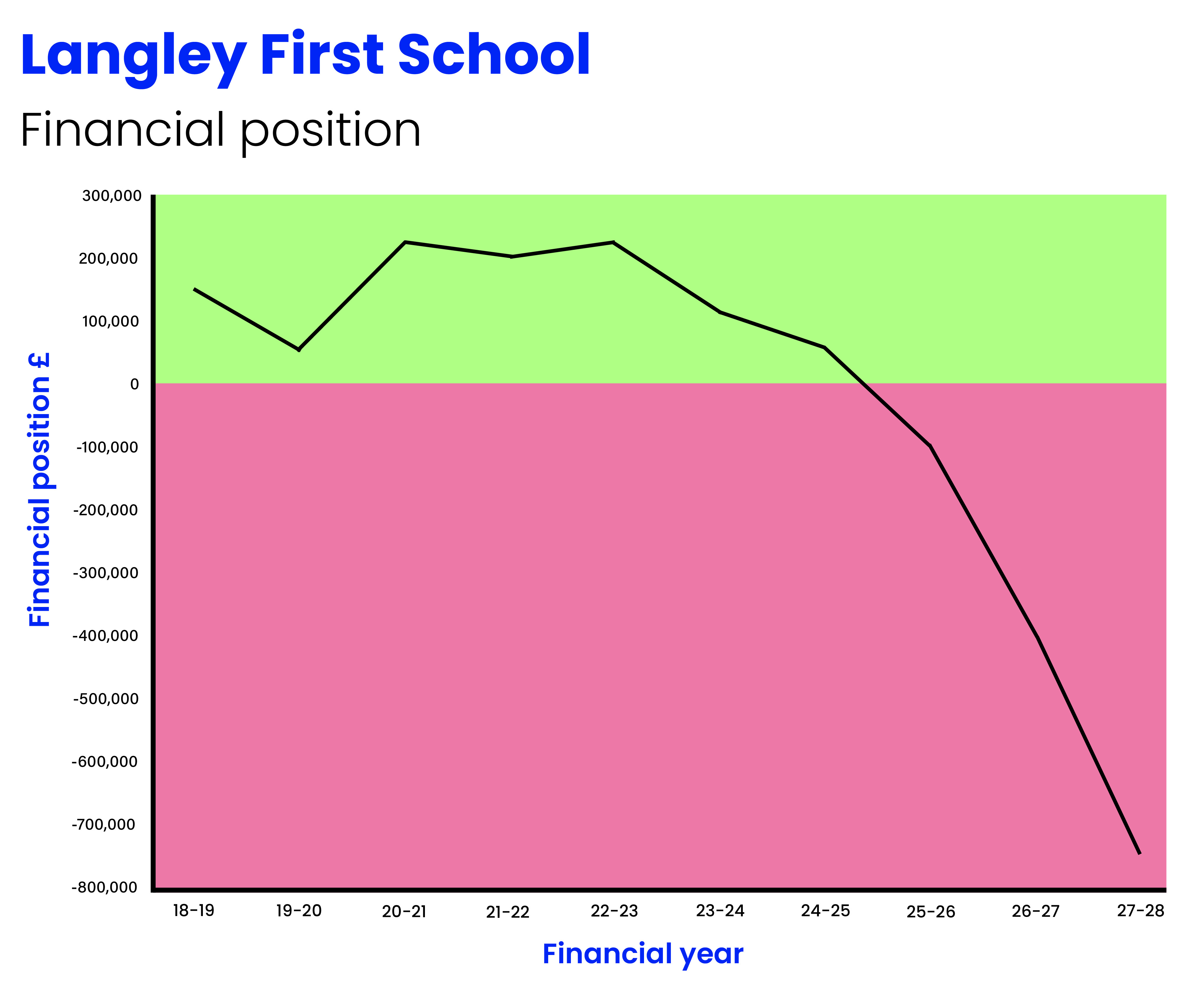 *This replaces a chart in the original version of this document which contained an error
Proposed future use of the Langley First School Site
Langley First School shares a site with Woodlawn Special School. The layout and structure of the existing school buildings means it is well-suited for pupils with Special Educational Needs and Disabilities.
As part of the consultation, the Council is proposing to work with the Governing Body of Woodlawn Special School with a view to repurposing the site to focus on the development of high-quality specialist education for children with SEND.
Currently, Woodlawn School is based across multiple sites and requires more space to meet the growing needs of those it supports. By utilising space currently used by Langley First, it creates a dedicated, single site for Woodlawn which provides a whole-school solution from Reception to Post 16. This will bring a wider benefit for North Tyneside families with children with SEND.
Which other options have been considered?
The intention of all options we considered was to reduce the number of students admitted to first schools within the NEPA by 60 places so that, in future, there are 390 places across each year group in the three-tier system – in First Schools, Middle Schools and the High School.
All schools in the NEPA were considered for merger or closure.
Several other options have been considered and modelled which have looked at all First schools. These can be found in more detail in the Options and Data document.
All of the options considered looked at several factors, including the school building and location, local housing and birth rates, financial viability and pupil numbers and surplus capacity.
All the options considered would reduce the number of First School places by 60, bringing it into alignment with High School places. In the Options Appraisal, we describe why every other option was discounted. Some of them were options that the Council could not support financially, all of them would involve at least one school closure and some of them would have a direct impact on more schools. It was therefore felt that there was no other suitable option for a merger.
The number of new homes being built now and in the future in the NEPA was also considered. On average, each 100 homes brings an extra 32 pupils across all twelve year groups. Even with all the homes planned in NEPA and indeed across all of North Tyneside, there would still not be enough pupils to fill the empty places at schools.
What happens next?
Any proposal for school reorganisation must be carried out in accordance with Department for Education (DfE) statutory guidance.
The Council cannot take a decision to merge a school without having held a consultation on the proposal, which will include seeking the views of members of the public. The first stage of consultation will be informal and opens on 2 October 2025.
The detail below sets out the expected timescales for the process:
Consultation – 2 October to 13 November 2025
The initial consultation will take place for six weeks. This will include the publication of consultation material and parental information sessions.
Once the consultation closes, the Council will analyse the responses.
Statutory Public Notice and Representation Period – November to December 2025
Following a thorough analysis of consultation responses, and if appropriate, a delegated decision will be required to publish a statutory notice. As part of the analysis of consultation responses, all options not previously explored will be considered and necessary due diligence undertaken.
If an alternative viable option is presented, the timeline would need to be reviewed, and we would taken the necessary time to evaluate. If no viable alternative options are put forward the Council will decide to proceed with this proposal. At this stage, statutory notices would be published which commences a Statutory Representation Period. This is where any person or organisation can submit comments to the Council within a four-week period.
Decision Making – January 2026
Once the representation period closes, the Council’s cabinet would consider responses to the statutory notice and make the final decision on whether to agree the proposal or not.
Taking part in the consultation
We are clear that no decision has been made. The public consultation runs until noon on 13 November 2025. We encourage you to take part in the online consultation on Our North Tyneside Voice. A range of Frequently Asked Questions are available on the site, please read these before completing the survey.
If you need us to do anything differently to help you take part in this survey, including providing this information in another language or format, please