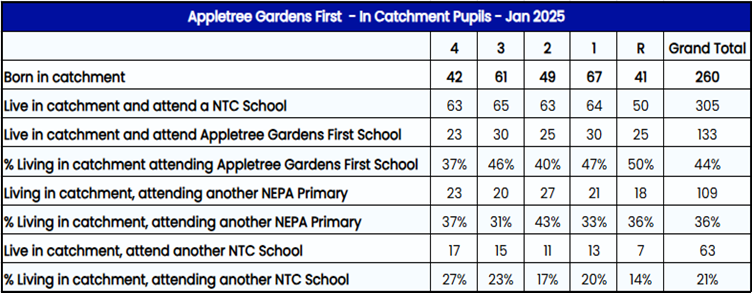
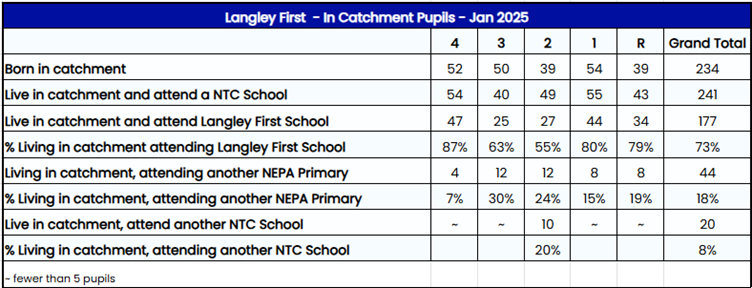
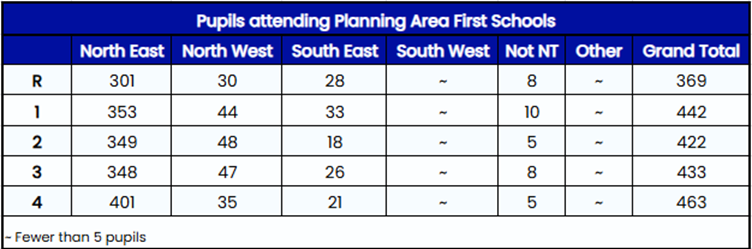
Options and background data for Langley First School and Appletree Gardens First School
Background
The North East Planning Area (Whitley Bay and Monkseaton)
The North East Planning Area (NEPA) comprises fourteen schools (eight First, four Middle, two High). Currently, eight of the schools are Foundation Trust schools and six are community schools. The Authority is committed to ensuring that there is a sustainable, sufficient, and high-quality educational system in the planning area and has worked closely in partnership with the schools over many years to address the challenges faced.
A pre-publication consultation in 2024 regarding the future of Monkseaton High School took place for six weeks between 17 September and 30 October 2024 in accordance with DfE statutory guidance. All views expressed were listened to and carefully considered. However, during the period of pre-publication consultation, no viable alternatives to closure were put forward.
Following statutory consultation, Cabinet took the decision to approve the proposal, without modification, that Monkseaton High School will close on 31 August 2026.
Impact of the closure of Monkseaton High School on other schools in the North East Planning Area
The Cabinet Report in September 2024 said:
“Were the decision made to close Monkseaton High School, this could have wider impacts on schools in the area and that this would likely lead to other school closures in years to come and/or the need for other amendments to admission numbers at other schools.”
As part of the materials published during the statutory consultation, the Community Impact Assessment (December 2024) said:
“There will be an impact on other schools in the Borough, particularly those in the three-tier system. This has been made clear for several years through the Authority’s work with the school leaders in the North East Planning Area as ideally, the capacity and number of pupils on roll in each year group should be the same from Reception through to Year 11. However, as this is not the case, and due to the falling birth rate, there is the potential for there to be a need for consideration of other school closures in years to come and/or the need for other amendments to PANs at other schools, and as a consequence, the three-tier system would become smaller and parental choice across the borough would be reduced.”
The Council has been clear from the outset that the closure of Monkseaton High School could result in the closure of other schools. Pupil numbers moving through First and Middle Schools need to align with available places in Whitley Bay High School. This alignment has become more pressing due to a declining birth rate, which means fewer pupils are entering First Schools. As a result, many schools are operating below capacity, which is not financially or educationally sustainable.
The Council remains committed to the three-tier system but recognises that changes are necessary to ensure the long-term sustainability of schools. The Authority accepts that if the proposals are agreed, it would result in a smaller system and would reduce parental choice.
Published Admission Numbers (PANs) in the North East Planning Area
To achieve the alignment referred to above, it is proposed that the overall PANs of first schools within the NEPA are reduced by 60 places and middle schools within the NEPA by up to 138 places so that, in future, there are 390 places across each year group in the three-tier system.
Proposals for school closures and mergers in the North East Planning Area
For the North East Planning Area, the Council is proposing to explore the potential:
- closure of Monkseaton Middle School.
- merger of Langley First School and Appletree Gardens First School, with the proposal to close Langley First School, and accommodate the combined pupils on the Appletree Gardens First School site. The merged school would retain the original Appletree Gardens First School Department for Education school number and be based on the Appletree Gardens First School site.
- work with Governing Bodies of Valley Gardens, Wellfield and Marden Bridge Middle Schools and Whitley Bay High School to amend their PANs to meet the needs of pupils within the catchment area.
If all of these proposals were approved, it would mean that in the future, there would be 390 places in every year group in the three-tier system. This would align the First Schools and Middle Schools with the High School and would also mean there was an appropriate number of places to better match the birth rate in the planning area, thus removing the financial risk associated with surplus places.
These proposals are based on consideration of several factors, including the building (size, capacity, condition, location, distance from other schools, school rebuilding programme, any potential, appropriate alternative use of the building), local area factors (including housing and birth rates), financial viability and pupil numbers/surplus capacity.
These proposals are necessary to stabilise the three-tier system and secure its long-term viability.
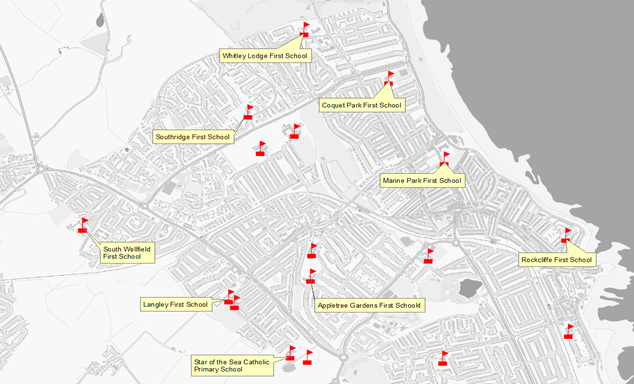
This map shows the eight First schools (and also the other schools in the planning area).
Potential Merger of Langley First School and Appletree Gardens First School and development of SEND provision at Woodlawn Special School
The Council is proposing to merge Langley First School and Appletree Gardens First School to create the same number of places in the First School phase as there are in the High School and potentially Middle School phase. This would mean the closure of Langley First School and the use of Appletree Gardens First School to accommodate the combined pupils.
The merged school would be on the Appletree Garden site and retain the original Appletree Gardens First School Department for Education school number.
It is acknowledged that Langley First School is a good, valued school, however, the proposal is based on a number of factors including financial viability, proximity to other schools and the size of the school. The school is in financial deficit (with a 2025/26 Budget Plan of £0.100m) which would be amplified by the reducing birth rate and excess parental choice in the area.
The location of Langley First School on a shared site with Woodlawn Special School, the layout, and structure of the existing school buildings make the site well-suited for an important and growing area of need within the community: Special Educational Needs and Disabilities (SEND) provision. It is proposed that the Authority works with the Governing Body of Woodlawn Special School with a view to repurposing the site to focus on and support the development of high-quality, specialist education for children with SEND at Woodlawn Special School. This is a provision that is currently in short supply locally and means Woodlawn Special School would be able to continue to serve children and families on a dedicated/ single site that provides a whole-school solution from Reception to Post 16.
Reasons for this proposal
The school sites are within approximately 600m of each other.
Appletree Gardens First School has a larger building, with 17 class base spaces (including existing school nursery rooms), therefore has more space for the relocation of pupils.
Appletree Gardens First School has a larger catchment, equating to 44 homes per planned place in catchment.
An 800m radius from Appletree Gardens First School covers all of Appletree Gardens catchment and the majority of Langley First School catchment.
Most dwellings can access Appletree Gardens First School without crossing major roads.
The furthest point from Appletree Gardens First School to the boundary of Langley First School catchment is 1,200m.
Langley First School is the smaller of the two sites – it has 13 class base spaces including existing school nursery rooms.
Langley First School has a smaller catchment with an average of 40 homes per planned place in catchment, when compared to Appletree Gardens Primary, at 44 homes per planned place and a borough average across first and Primary schools of 54. Retention of Langley First School rather than Appletree Gardens First School would mean that pupils in the eastern edge of Appletree Gardens First School would have 1,500m commute to a catchment school.
Appletree Gardens First and Langley First school buildings are within 600m of each other, with Star of the Sea Catholic Primary Academy being 400m from the Langley site. This means that commuting distances for pupils would be within reasonable expectations for the age range.
As part of the consultation, the Council is proposing to work with the Governing Body of Woodlawn Special School with a view to repurposing the site to focus on the development of high-quality specialist education for children with SEND.
Currently, Woodlawn School is based across multiple sites and requires more space to meet the growing needs of those it supports. By utilising space currently used by Langley First, it creates a dedicated, single site for Woodlawn which provides a whole-school solution from Reception to Post 16. This will bring a wider benefit for North Tyneside families with children with SEND.
Financial viability of Langley First– £0.052m surplus as at 31/3/25 but a cumulative deficit forecast of £0.100m by 31/3/26, increasing to £0.751m by 31/3/28
Appletree Gardens is more financially viable – £0.259m surplus as at 31/3/25, worsening to deficit of £0.131m by 31/3/28
While currently both schools are in surplus (they receive more funding than they spend), Langley First is predicting a deficit (spending more than they receive) in 2026 which is projected to grow to £0.751m by 2028. At the same time Appletree Gardens is predicting it will enter deficit by 2028. School leaders have made changes and worked hard with the Council to make the financial situation better, but because low pupil numbers mean less funding, the situation is not improving. If left unchanged, the risk is that the two schools would continue to grow in deficit, and this in turn would limit their ability to sustain high quality education.
Options Appraisal
Which options have been considered?
There have been several meetings held over the last few years with all Headteachers in the Monkseaton and Whitley Bay area, in groups and individually to develop a shared understanding of the issues, and to work together to develop possible options moving forward.
The consultation documentation regarding the closure of Monkseaton High School (available here.) outlined the discussions and options previously considered. The relevant options considered then are referred to below.
Option | Reasons the option was discounted |
To explore moving the three-tier system to a two-tier system of education.
| One option previously explored was moving the three-tier system to a two-tier system of education. This was considered in a review of education provision in 2000 and was not considered appropriate. It was then considered again in the education review of 2013-15. Significant consultation was undertaken in October 2014 and the feedback from that was clear that the schools and local community were committed to the three-tier system. As a result, it was agreed that the council would work with the schools to “maintain and raise standards and tackle the collective financial challenge” and would “work with Headteachers and Governing Bodies across the Whitley Bay and Monkseaton group of schools to retain the three-tier system while managing places, raising standards and controlling costs.”
The option was considered again in discussions with schools in 2022/23 but again dismissed as the vast majority of school leaders and governors were clear that they and the community wanted to maintain the three-tier system.
In the Cabinet Report of September 2023, the Council gave a firm commitment to the three-tier system in the Planning Area and to working together with the schools to ensure it is viable and sustainable, but in order for this to be taken forward there needed to be a firm commitment from all the schools in the Planning Area to protect the integrity of the current three-tier system and to continue to collaborate and work closely together to ensure educational and financial sustainability.
|
Move part of the Planning Area to a two-tier system of education | In early 2024 the council explored an option for part of the Planning Area to become two-tier. Further modelling made it clear that this option would carry too much risk. Parental choice and the commitment to the three-tier system would be the biggest factor and it would leave the wider North East Planning Area with a split system (three-tier/two-tier) and there would still be too many surplus places in the secondary year groups. This would be further compounded by falling birth rates over the last five years, meaning there would not be the pupils to fill all the places in the future.
|
Bringing all NEPA schools together under one Multi Academy Trust | In late 2023, the option was also discussed with the schools to consider creating a Multi-Academy Trust, but most of the schools confirmed that this was not something they would be interested in exploring further at that point. This is not something that the Council can mandate schools to do. |
Options specific to First School re-organisation
To achieve the alignment referred to above, it is proposed that the overall PANs of first schools within the NEPA are reduced by 60 places so that, in future, there are 390 places across each year group in the three-tier system – in First Schools, Middle Schools and the High School.
It is important to note that the Council would not support any First school going to one form entry. There is currently only one “one-form entry” First School (Coquet Park First School) in the Authority, and they have been unable to submit a budget plan which shows them coming back into financial balance within 3 years. It is believed that the National Funding Formula does not easily allow for financial viability for one-form entry first schools.
| PAN Rec to Year 4 |
Appletree Gardens First | 60 |
Coquet Park First | 30 |
Langley First | 60 |
Marine Park First | 90 |
Rockcliffe First | 45 |
Southridge First | 60 |
South Wellfield First | 60 |
Whitley Lodge First | 45 |
Total | 450 |
Current Published Admissions Number (PAN) at each First School
Options considered
All options outlined below would reduce the places available by 60.
Please refer to the Data Pack for the relevant data used to inform this options appraisal.
Option | Reasons the option was discounted |
Do nothing and let the schools admit up to their collective PAN | Due to the declining birth rate, the current Year 1 and current Reception are both well below the total PAN of 450 – and both are below the figure of 390. Therefore, there could be an argument to allow all 8 schools to stay open and share a reduced number of children. However, in reality the distribution of pupils will not be equal and in the current financial climate facing schools this is not something the Authority could support financially.
Additionally, there is a risk that the first schools admit above 390 and this would cause problems in future years for children leaving the first schools and not having a middle school or high school place.
|
Close Coquet Park First School and reduce Marine Park First School by 30 places
| Coquet Park ended 2024/25 with a cumulative deficit of £0.325m. They have been unable to submit a budget plan which shows them coming back into financial balance within three years. In line with Scheme for Financing Schools, the school is classified as being in a structural deficit, however, officers continue to work with the school to look at options to bring them back into financial balance.
The major issue is that Coquet Park first school is a Private Finance Initiative (PFI) school with a high proportion of the budget committed to the PFI contract charges. The PFI contractual obligations also result in a reduced opportunity to generate additional income from external sources.
The schools PFI scheme runs until 2032. Even if Coquet Park was to close, the Authority would remain contractually liable for the PFI charges, so this would not deliver any financial savings. Given the contractual arrangements in place, it is not feasible for the PFI to be terminated early.
Marine Park could drop from a three-form intake to a two-form intake, but Marine Park is also a PFI school, and the issues faced could be similar to Coquet Park First School if they admitted 30 less pupils.
This is not a solution the Authority could support financially. |
Close Coquet Park First School OR reduce Marine Park First School by 30 places AND reduce two of the 60 PAN schools to a PAN of 45 | See above for the reasons regarding the closure of Coquet Park First School or the reduction in PAN for Marine Park School.
This option would still involve a school closure and/or associated costs and issues regarding PFI contract plus it would create two more schools with a PAN of 45 and the need to move to mixed class teaching/vertical grouping, leaving a total of four schools in the NEPA operating with a PAN of 45 and mixed-age class structures.
There would therefore be an impact on three schools in this option. |
Close Rockcliffe First School or Whitley Lodge First School (schools with a PAN of 45) and reduce another school with a PAN of 60 to a PAN of 45 | There are currently two schools in the NEPA operating with a PAN of 45 – both geographically serve outlying parts of the planning area and therefore the closure of one of them would leave a much larger distance for some children to travel to school. (See Maps below)
This option would still involve a school closure plus it would create another school with a PAN of 45 and the need to move to mixed class teaching/vertical grouping, leaving a total of three schools in the NEPA operating with a PAN of 45 and mixed-age class structures. |
Close/merge another school with a PAN of 60 | Appletree Gardens First School See above for the rationale for not closing Appletree Gardens First School site - it has a larger building, with 17 class base spaces (including existing school nursery rooms), therefore has more space for the relocation of pupils.
An 800m radius from Appletree Gardens First School covers all of their own catchment and the majority of Langley First School catchment.
Southridge First School The closure of Southridge would leave an area in the middle of the NEPA without easy access to a nearby school. (See Maps below)
There are 298 in the school and less than 1% surplus places (Jan 2025 census data). The school site is not sufficient in size in its existing buildings to provide extra accommodation for a combined cohort from their school and another school, and the opportunity to expand on site to provide any more capacity is limited.
South Wellfield First School The school serves an outlying part of the planning area and therefore closure of this school would leave a much larger distance for some children to travel to school. (See Maps below)
There are 281 in the school and 6% surplus places (Jan 2025 census data). The school site is not sufficient in size in its existing buildings to provide extra accommodation for a combined cohort from their school and another school, and the opportunity to expand on site to provide any more capacity is limited.
Therefore, there is no other suitable option for a merger. |
The maps below show each of the eight First schools at the centre point of a circle with an 800m radius. (© Crown Copyright and database right 2025. Ordnance Survey License Number AC0000820329)
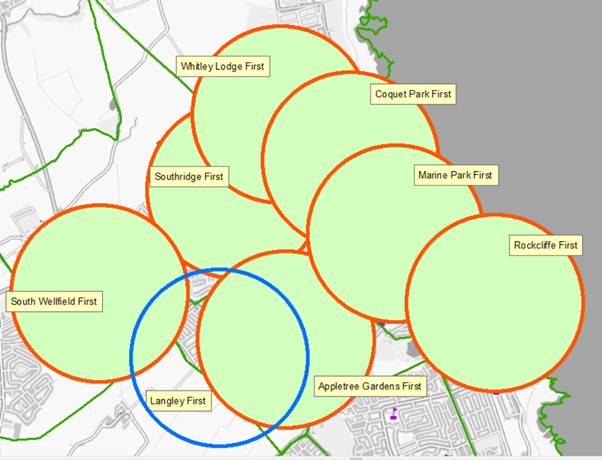
This map shows each of the eight First schools at the centre point of a circle with an 800m radius. If Langley First School were to close, it shows the houses that would be further than 800m from their nearest First school.
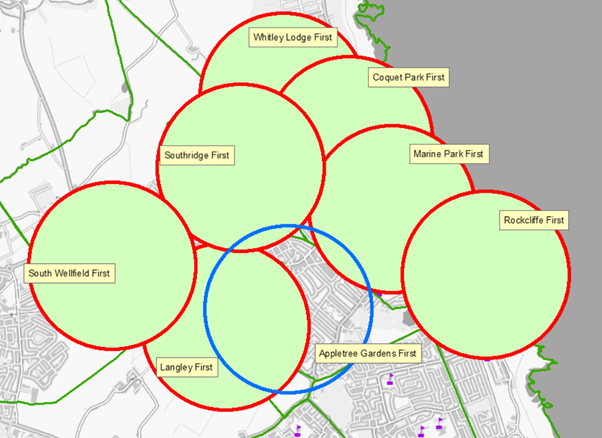
This map shows each of the eight First schools at the centre point of a circle with an 800m radius. If Appletree Gardens First School were to close, it shows the houses that would be further than 800m from their nearest First school.
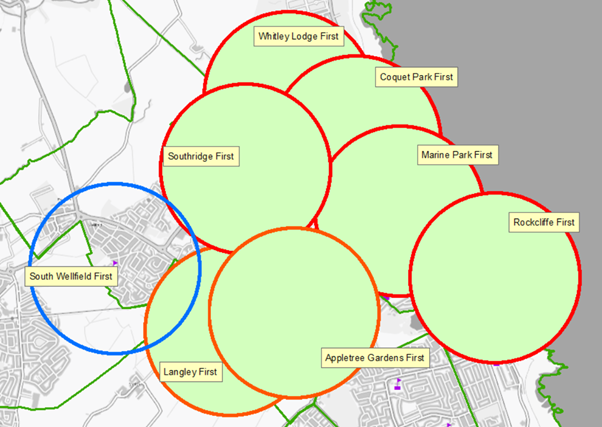 This map shows each of the eight First schools at the centre point of a circle with an 800m radius. If South Wellfield First School were to close, it shows the houses that would be further than 800m from their nearest First school.
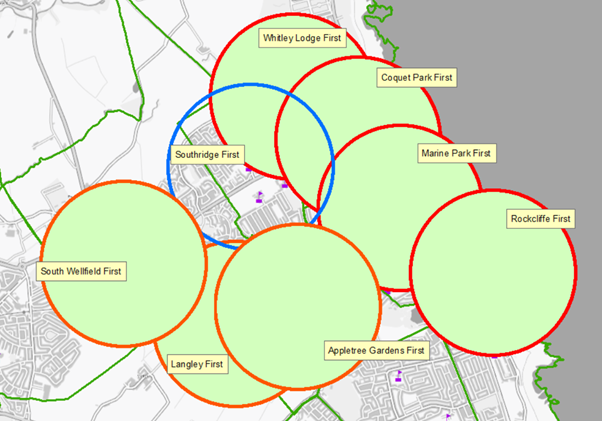 This map shows each of the eight First schools at the centre point of a circle with an 800m radius. If Southridge First School were to close, it shows the houses that would be further than 800m from their nearest First school.
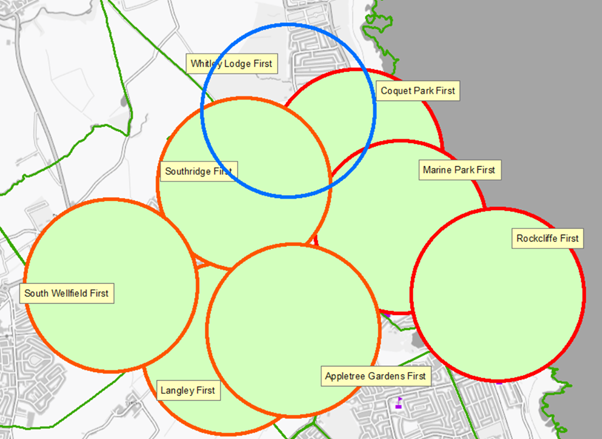 This map shows each of the eight First schools at the centre point of a circle with an 800m radius. If Whitley Lodge First School were to close, it shows the houses that would be further than 800m from their nearest First school.
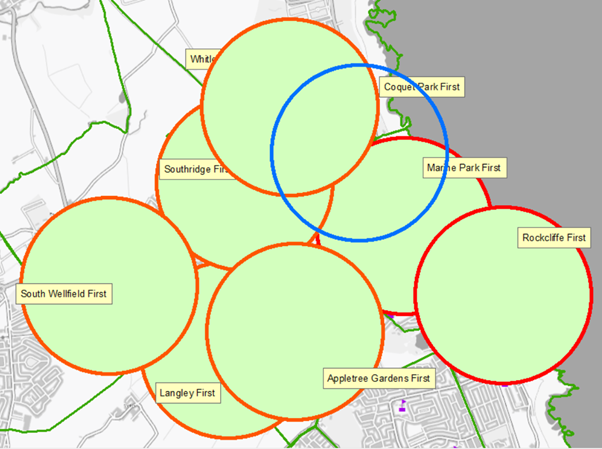 This map shows each of the eight First schools at the centre point of a circle with an 800m radius. If Coquet Park First School were to close, it shows the houses that would be further than 800m from their nearest First school.
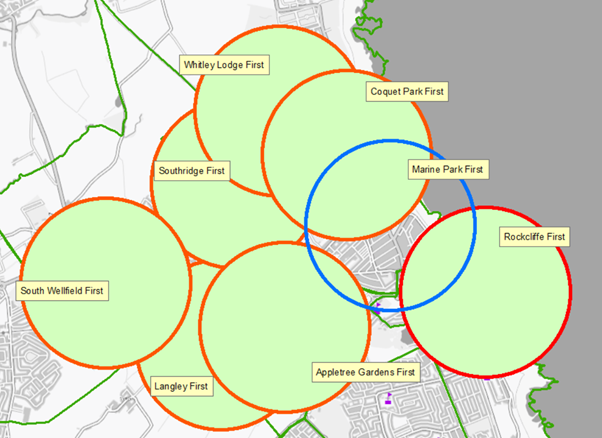 This map shows each of the eight First schools at the centre point of a circle with an 800m radius. If Marine Park First School were to close, it shows the houses that would be further than 800m from their nearest First school.
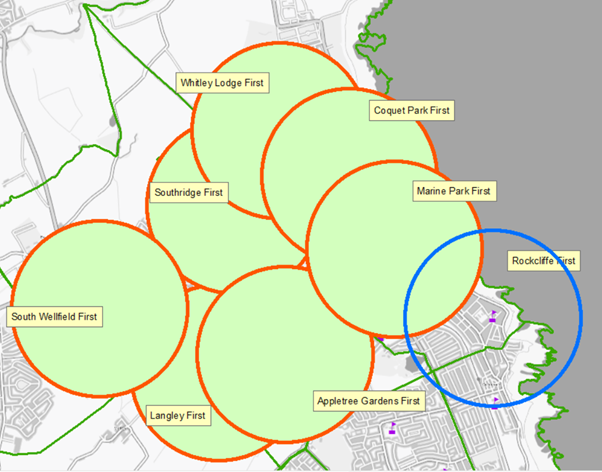 This map shows each of the eight First schools at the centre point of a circle with an 800m radius. If Rockcliffe First School were to close, it shows the houses that would be further than 800m from their nearest First school.
Here is the data used to inform decisions around options:
Pupil and population data is taken from January 2025 Census.
Birth rate data is taken from the last full year of data (September 2023 to August 2024, published Oct 2024).
Projections are calculated using our pupil projection methodology. This table shows the number of GP birth registrations in North Tyneside with a breakdown for each planning area in the Borough (the planning area is the geographic region of North Tyneside)
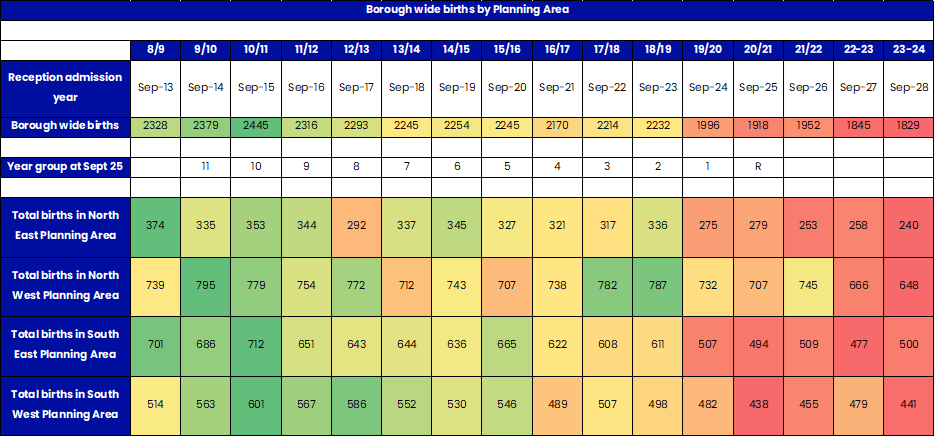
This is how it looks for North Tyneside as a whole on a graph: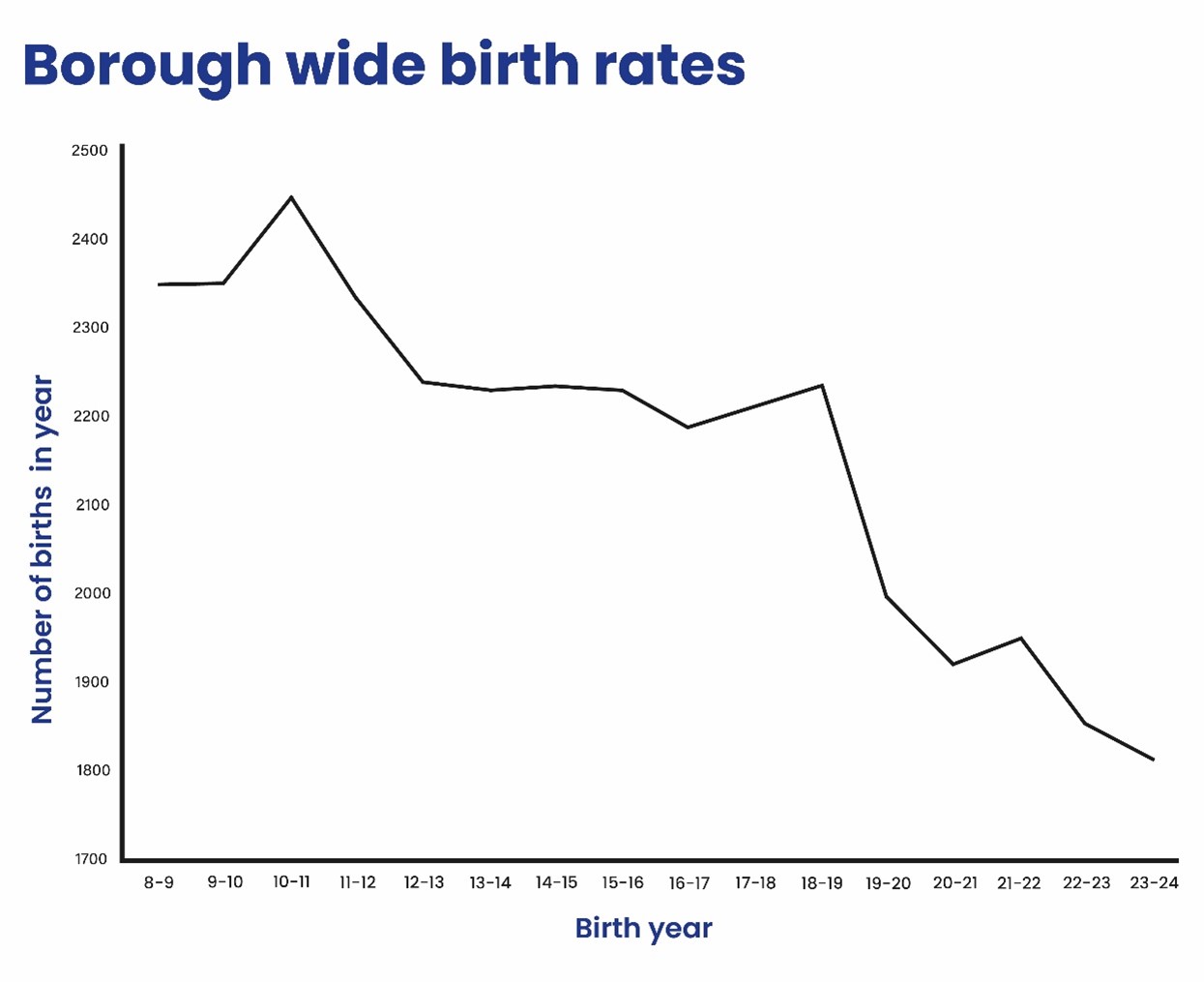
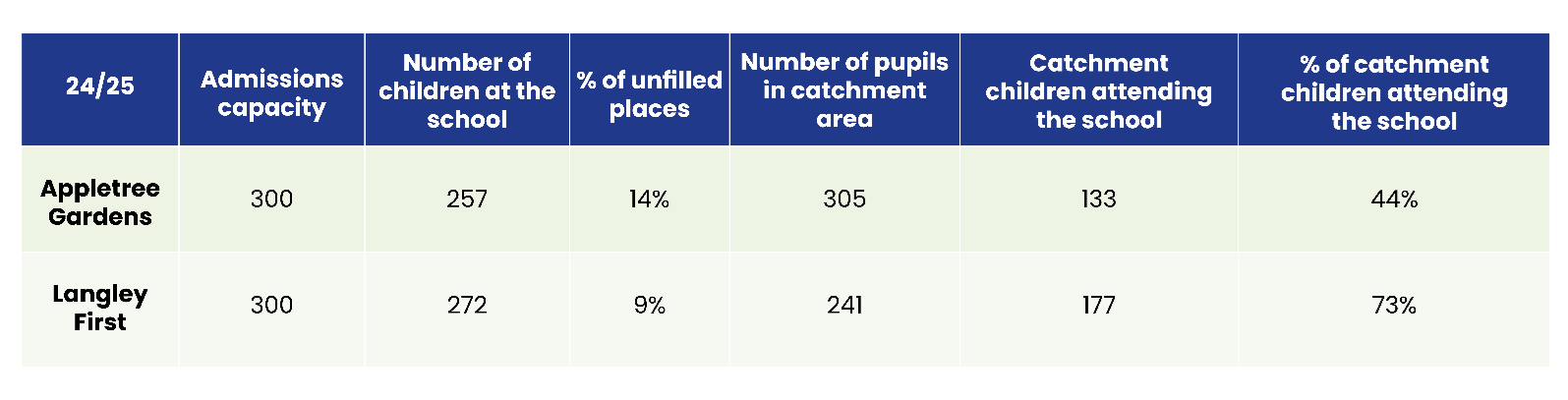
This table shows as of 2024/2025:
- The admissions capacity (Published Admissions Capacity)
- The capacity of the school buildings (which is often higher than the admissions capacity)
- The number of children at the school (as of January 2025)
- Unfilled places as a percentage of the available admissions places (also known as ‘surplus places’)
- The number of all pupils living in the catchment area
- The number and percentage of children living in the catchment area who choose to attend the school
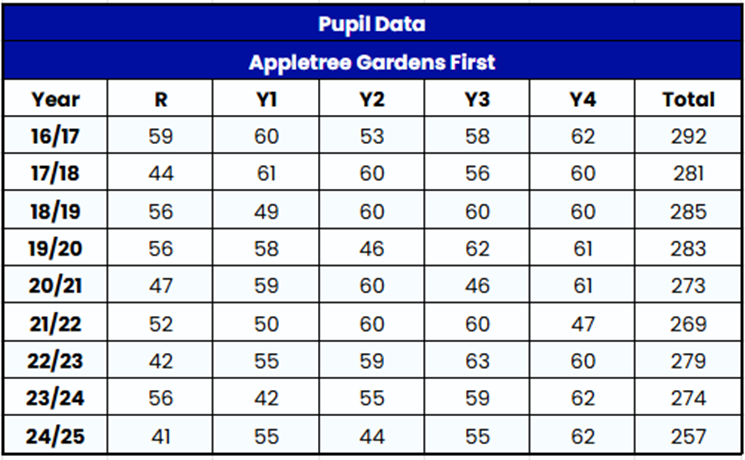
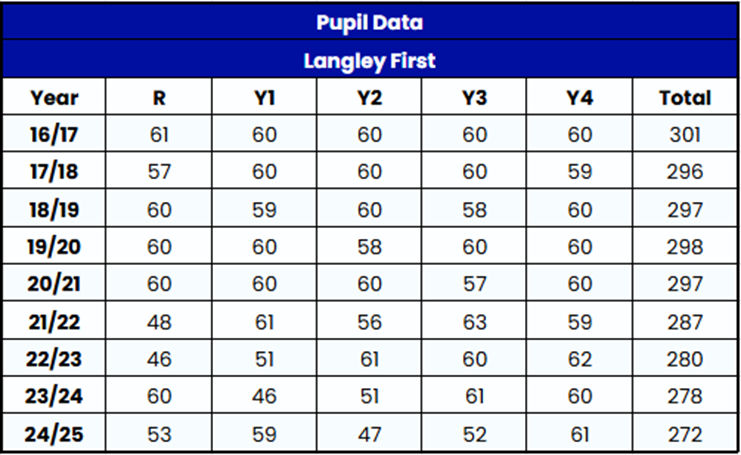
These tables show how many pupils attended both schools in the last nine years:
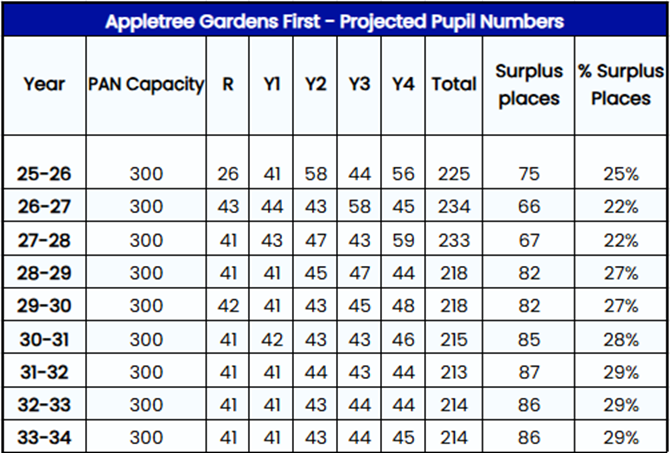
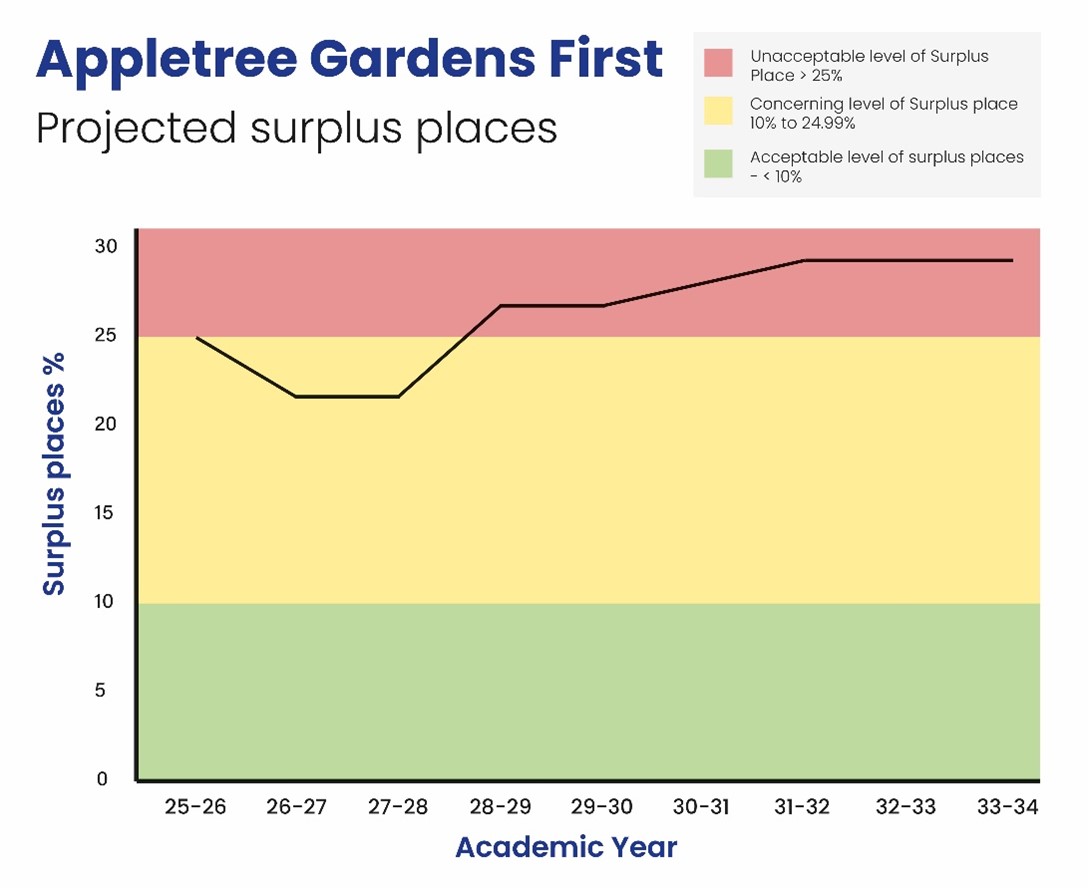
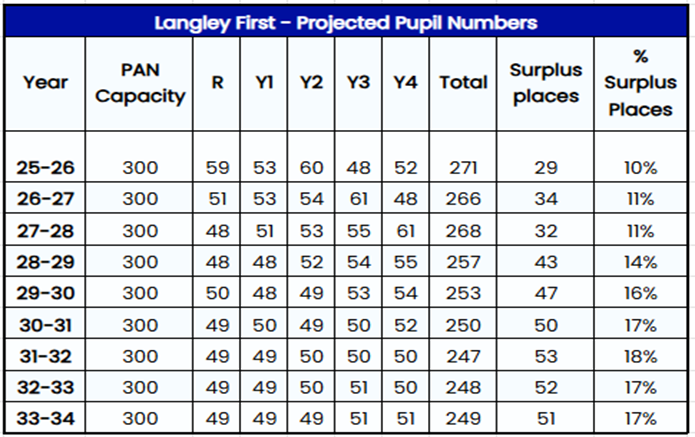
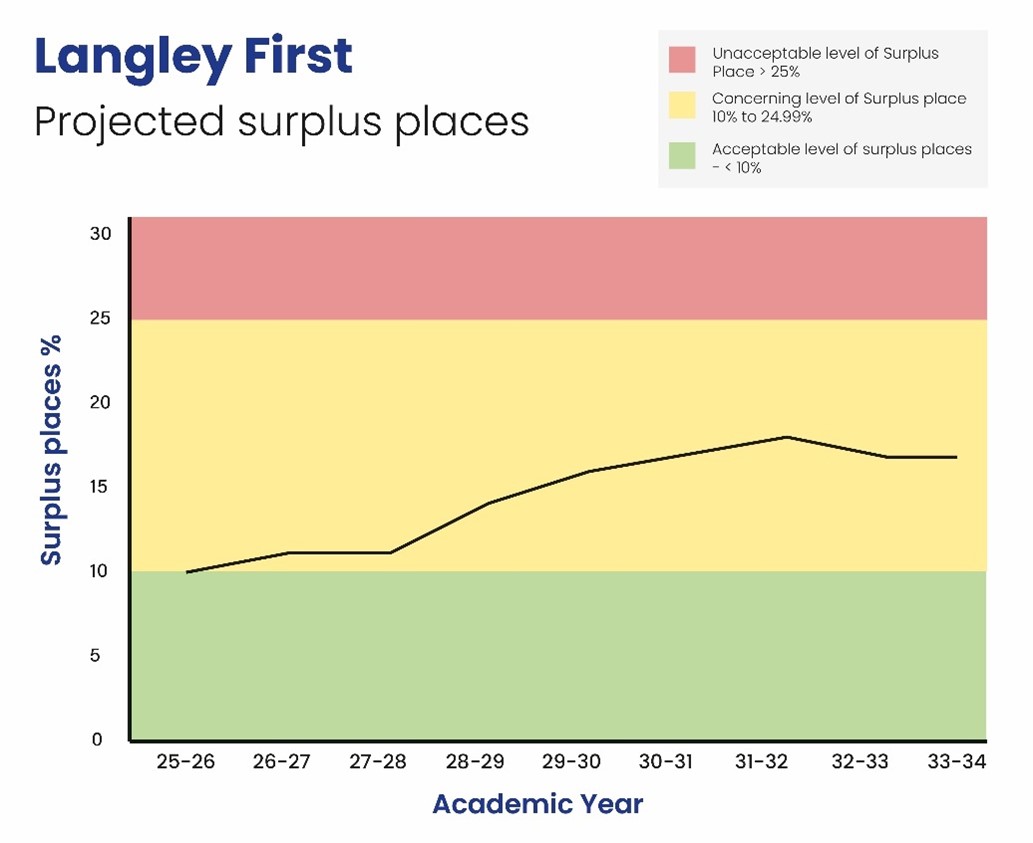
These tables show pupil projections for the next nine years and what the surplus would be compared to the admissions capacity of the schools (based on local birth rate data)
These tables show where the pupils attending Appletree Gardens First School or Langley First School, and where they live.